

Insights
In-depth research and data-driven insights on quantitative finance, factor investing, risk, and ESG from the TEJ research team.
Trending
Editor's picks from our research desk.

Fundamental Factor Research: Monthly Revenue Information – part1
The Taiwan equity market possesses a rare institutional advantage globally: under the Securities and Exchange Act, listed companies are required to announce and report their operational results for the preceding month by the 10th of each month (Exception: starting from FY2026, insurance companies and entities with insurance subsidiaries may extend their disclosure deadline to the 15th of each month). This is commonly referred to in the market as "Monthly Revenue".
Factor Research – Tracking Smart Money Footprints via Foreign Institutional Concentration – QFII Part 1
Track QFII ‘smart money’ footprints in Taiwan large-cap stocks! Learn how the Foreign-Institutional Trading Concentration (conc_qfii) factor predicts returns.

Empirical Research on Behavioral Factors in the Taiwan Stock Market: A Case Study of the Share Distribution
In an AI-driven Taiwan stock market, mastering chip distribution (ownership structure) is the key to profitability. This study delves into the Share Distribution data from the TDCC, transforming 15 tiers of shareholding data into behavioral finance factors such as investor attention, opinion dispersion, and retail speculation. By utilizing Fama–MacBeth two-stage regression and the alphalens-tej quantitative tool, we precisely validate the predictive power of psychological biases on stock returns, providing investors with actionable Alpha strategies and robust risk management solutions.
Insights
Browse all articles by topic.
 Market Knowledge & Data Guides
What is Market Sentiment & How is it Used in Trade Strategy
What is market sentiment? How can it enhance trade strategies? Learn more about the importance of market sentiment and its key indicators in this article.
 Market Knowledge & Data Guides
Understanding Long-Short Equity Hedge Funds Strategies
Learn about the basics of long-short equity investing, from its core concepts and the common strategies, as well as the benefits and risks involved.
 Market Knowledge & Data Guides
Quantitative Investing Strategies: 10 Types, Pros & Cons
This article will explore the common types of quantitative investment strategies as well as the advantages and potential challenges of this trading model.
 Market Knowledge & Data Guides
What is Market Data: Meaning, Types, Examples, Pros, & Cons
What is market data? Learn about its definition, types, sources, and applications to leverage it for informed decision-making in trading and investment.
 Event & Alternative Signals
Treasury Stock: A Strategic Tool for Corporate Flexibility and Value Management
Treasury stock refers to shares a company repurchases with its own cash. These shares may be held for future issuance or permanently retired from circulation. Companies usually set a maximum buyback volume, but the actual repurchased amount determines the execution rate—the ratio of completed buybacks to the planned volume. A high execution rate suggests aggressive buybacks, while a low rate may indicate caution amid market conditions.
 Market Knowledge & Data Guides
Financial and Corporate Credit Analysis Services for Banks and Investment Institutions
For banks and investment institutions, managing corporate credit risk is a critical aspect of securing sound lending and investment decisions. The ability to detect potential risks before they escalate can define the success or failure of an investment strategy. In today’s fast-paced financial landscape, having the right tools to evaluate creditworthiness is more important than ever.
 Market Knowledge & Data Guides
Optimal Capital Structure:How to Minimize Your Company’s Cost of Capital
For all companies, there are two simple methods to increase their value, Revenue up and Cost down. While growth companies typically focus on revenue expansion, value companies often shift their focus to cost reduction, especially through optimizing their capital structure. By finding the optimal capital structure, companies can reduce their cost of capital, thus improving profitability.
 Market Knowledge & Data Guides
What is Day Trading ? TEJ Guides You Through The Basics From The Ground Up
Have you ever heard friends excitedly discuss: “Today is perfect for day trading! Stock prices will have big intraday swings, hurry and jump in to make a profit!” Such enthusiasm might tempt you, but also leave you wondering: What exactly is day trading? Is it really that easy to make money, or is there hidden risk behind it? Don’t worry, this article will unveil the mystery of day trading. TEJ will take you through the mechanisms and risks of day trading, and explain why this “buy and sell within a day” strategy attracts so many eager traders.
 Market Knowledge & Data Guides
What is the Directors’ Holdings ? TEJ will help you get to know each other from scratch
In corporate governance and corporate operations, the proportion of shares held by directors and supervisors (Directors’ Holdings) is considered an important indicator that not only reflects the confidence of the company’s management in the future development of the company but may also affect investors’ expectations of the company’s future performance. In Taiwan, the level of Directors’ Holdings has long been a focus of market participants’ attention because it involves the adjustment of interests within the company, the distribution of control, and the trust of external investors. However, effectively interpreting and utilizing such information may be a significant challenge for the average investor. TEJ Taiwan Economic News will introduce Directors’ Holdings in detail, explain their impact on a company, and how to find relevant shareholding information through various channels. This will help readers better understand the meaning of Directors’ Holdings and use it as an important basis for corporate analyses.
 Market Knowledge & Data Guides
Advancing Business Resilience: Mastering Credit Risk Management Models
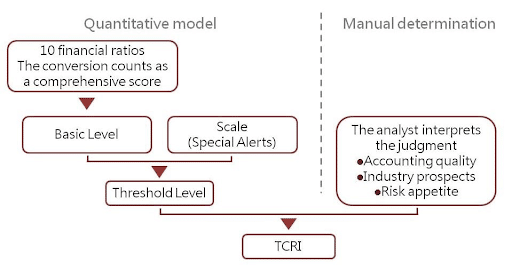
In today’s dynamic and fast-changing business environment, effective corporate credit risk management is paramount for both investment institutions and bank lending units. The ability to assess credit risk effectively is crucial to making sound financial decisions, whether evaluating potential investments or business partners. TEJ leads this field by providing innovative solutions and expertise, supporting over 95% of Taiwan’s banks and investment institutions. As an indispensable credit risk indicator, TCRI (Taiwan Corporate Credit Risk Index) serves as a common language across the financial sector, ensuring that institutions have the insights needed to make informed and secure decisions.
 Market Knowledge & Data Guides
Advancing Business Resilience: Mastering Credit Risk Management Models
In today’s dynamic and fast-changing business environment, effective corporate credit risk management is paramount for both investment institutions and bank lending units. As an indispensable credit risk indicator, TCRI serves as a common language across the financial sector, ensuring that institutions have the insights needed to make informed and secure decisions!
 Market Knowledge & Data Guides
Quantitative Data Analysis Explained: Methods & Finance Uses
What is quantitative data analysis? See how numerical data is analyzed using proven methods, with examples and practical applications in finance and analytics.