
Table of Contents
本策略基於追蹤市場中所謂「聰明錢」的流向,即三大法人(外資、投信、自營商)的動向。策略假設,當三大法人對市場未來方向有一致且強烈的看法時,跟隨其方向進行交易的勝率較高。
本研究以台灣指數期貨(台指期, TX)作為唯一的交易標的,並使用每日的最高價、最低價、收盤價資料(用於計算 ATR 波動率),以及三大法人的未平倉數據(用於產生交易訊號)。由於策略中的波動濾網需要一段時間的歷史數據進行(warm-up),其中最長的計算週期為 vol_window(252天),為了確保回測開始時有足夠穩定的歷史數據,實際回測期間定為 2016年1月1日 至 2025年10月1日,以確保所有交易訊號的嚴謹性與有效性。
三大法人未平倉淨口數:
ATR(Average True Range):
如果 net_oi 為正,則做多;如果為負,則做空。倉位大小由 round(net_oi / 1000) 決定。例如:今天未平倉量10000,則下單10口,明天未平倉量11000,在下一口。
當滿足以下任一條件時,策略會平倉出場:
這種進出場門檻的不同設計被稱為 Hysteresis(磁滯/緩衝區),目的是為了防止策略在信號臨界點附近因小波動而頻繁進出,增加交易的穩定性。
期貨合約到期日的前一天,zipline 會自動將即將到期的合約平倉,策略邏輯會在下一個月份的主力合約上建立新倉位,以確保交易的連續性。(如需提前轉倉仍需寫 roll_futures)
import os

os.environ['TEJAPI_KEY'] = 'YOUR_KEY'
os.environ['TEJAPI_BASE'] = 'http://tejapi.tejwin.com'

os.environ['ticker'] = 'IR0001'
os.environ['future'] = 'TX'
os.environ['mdate'] = '20100101 20250920'

!zipline ingest -b tquant_future
import pandas as pd
import numpy as np
import talib
import pyfolio as pf
from zipline import run_algorithm
from zipline.api import(
continuous_future,
order_target,
get_datetime,
schedule_function,
date_rules,
time_rules,
record,
set_commission,
set_slippage,
symbol,
set_benchmark,
get_open_orders,
)
from zipline.finance import commission, slippage
from zipline.TQresearch.futures_smart_money_positions import institution_future_data
from zipline.assets import Futuredef initialize(context):
context.tx_future = continuous_future('TX', offset = 0, roll = 'calendar', adjustment = None)
context.benchmark_asset = symbol('IR0001')
set_commission(futures = commission.PerContract(cost = 200, exchange_fee = 0))
set_slippage(futures = slippage.FixedSlippage(spread = 10))
set_benchmark(symbol('IR0001'))
# 門檻
context.signal_threshold = 5000
context.exit_threshold = 1000
# 波動濾網參數
context.atr_window = 12
context.vol_window = 252
context.vol_quantile = 0.9
# 下載法人數據
start_date = '2010-01-01'
end_date = '2025-10-15'
print('正在下載三大法人未平倉數據...')
all_inst_data = institution_future_data.get_futures_institutions_data(root_symbol = ['TX'], st = start_date)
if not all_inst_data.empty:
df = all_inst_data.set_index('mdate')
df['calculated_net_oi'] = df['oi_con_ls_net_dealers'] + df['oi_con_ls_net_finis'] + df['oi_con_ls_net_funds']
context.major_inst_oi = df[['calculated_net_oi']]
else:
context.major_inst_oi = pd.DataFrame()
print("警告:未下載到任何三大法人數據")
schedule_function(rebalance, date_rule = date_rules.every_day(), time_rule = time_rules.market_open())def rebalance(context, data):
current_dt = get_datetime().tz_localize(None)
try:
# 抓三大法人資料
df = context.major_inst_oi
if df is None or df.empty:
return
try:
session_dt = pd.Timestamp(data.current_session).tz_localize(None).normalize()
except Exception:
session_dt = current_dt.normalize()
idx_ts = pd.to_datetime(df.index)
try:
idx_ts = idx_ts.tz_convert(None)
except Exception:
idx_ts = idx_ts.tz_localize(None)
idx_norm = idx_ts.normalize()
# 取出小於現在時間的資料
mask = idx_norm < session_dt
if not mask.any():
return
last_idx = df.index[mask][-1]
signal_row = df.loc[[last_idx]]
net_oi = signal_row["calculated_net_oi"].iloc[0]
if pd.isna(net_oi):
return
# ATR 波動濾網
history = data.history(
context.tx_future,
["high", "low", "close"],
context.vol_window + context.atr_window + 2,
"1d"
)
atr_series = talib.ATR(
history['high'],
history['low'],
history['close'],
timeperiod = context.atr_window
)
valid_atr = atr_series.dropna()
is_vol_high = False
current_atr = np.nan
vol_threshold = np.nan
if len(atr_series) >= context.vol_window + 1:
current_atr = atr_series.iloc[-1]
past_atrs = atr_series.iloc[-(context.vol_window + 1): -1]
vol_threshold = past_atrs.quantile(context.vol_quantile)
is_vol_high = current_atr > vol_threshold
# 當前交易合約與現有口數
current_contract = data.current(context.tx_future, "contract")
if current_contract is None:
return
pos = context.portfolio.positions.get(current_contract)
current_qty = int(pos.amount) if pos else 0
raw_target = int(round(net_oi / 1000))
final_target = current_qty
# 實現交易邏輯
if is_vol_high:
final_target = 0
else:
if abs(net_oi) < context.exit_threshold:
final_target = 0
elif abs(net_oi) > context.signal_threshold:
final_target = raw_target
open_orders = get_open_orders()
if current_contract not in open_orders:
if final_target != current_qty:
order_target(current_contract, final_target)
print(
f"{current_dt.date()} 調整口數 {current_qty} 到 {final_target}"
f"net_oi = {net_oi}, ATR = {current_atr:.2f}, high_vol = {is_vol_high}"
)
record(
target_pos = final_target,
net_oi = net_oi,
atr = current_atr,
vol_threshold = vol_threshold,
is_vol_high = int(is_vol_high)
)
except Exception as e:
print(f"Error in rebalance on {current_dt}: {e}")def analyze(context, results):
returns, positions, transactions = pf.utils.extract_rets_pos_txn_from_zipline(results)
benchmark_rets = results.benchmark_return
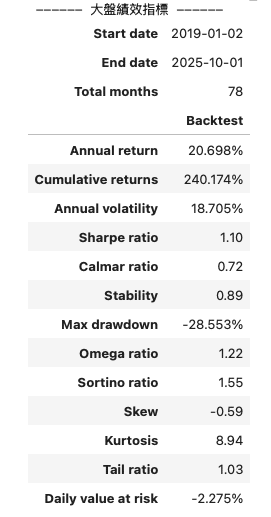
print("------ 大盤績效指標 ------")
pf.show_perf_stats(benchmark_rets)
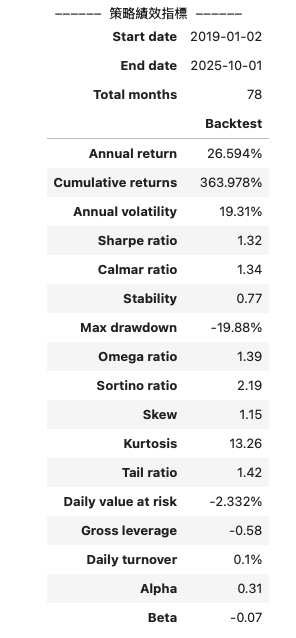
print("------ 策略績效指標 ------")
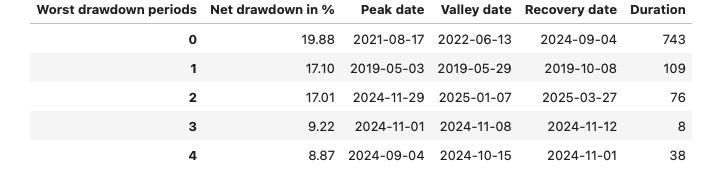
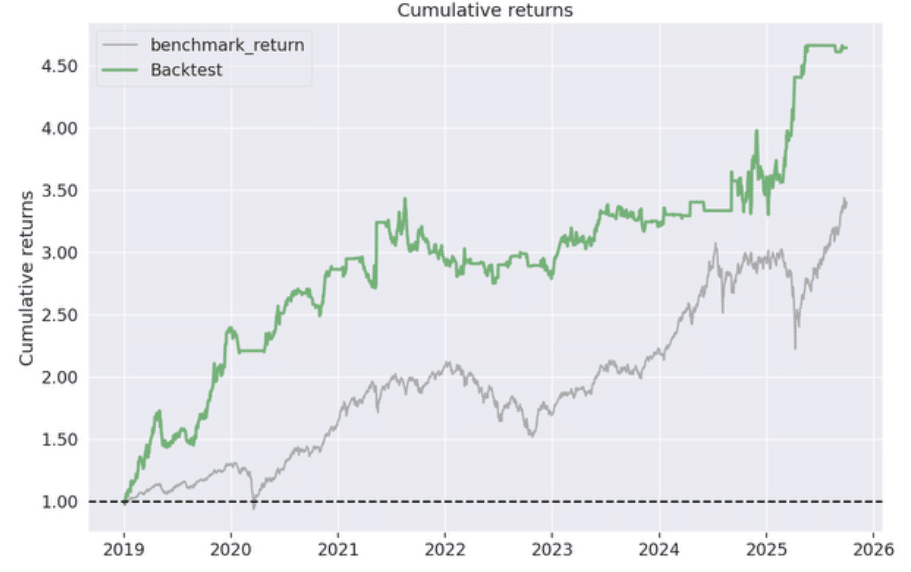
pf.create_returns_tear_sheet(
returns = returns,
positions = positions,
transactions = transactions,
benchmark_rets = benchmark_rets
)
if __name__ == '__main__':
start_date = pd.Timestamp('2019-01-01', tz = 'utc')
end_date = pd.Timestamp('2025-10-1', tz = 'utc')
result = run_algorithm(
start = start_date,
end = end_date,
initialize = initialize,
capital_base = 10000000,
analyze = analyze,
data_frequency = 'daily',
bundle = 'tquant_future'
)
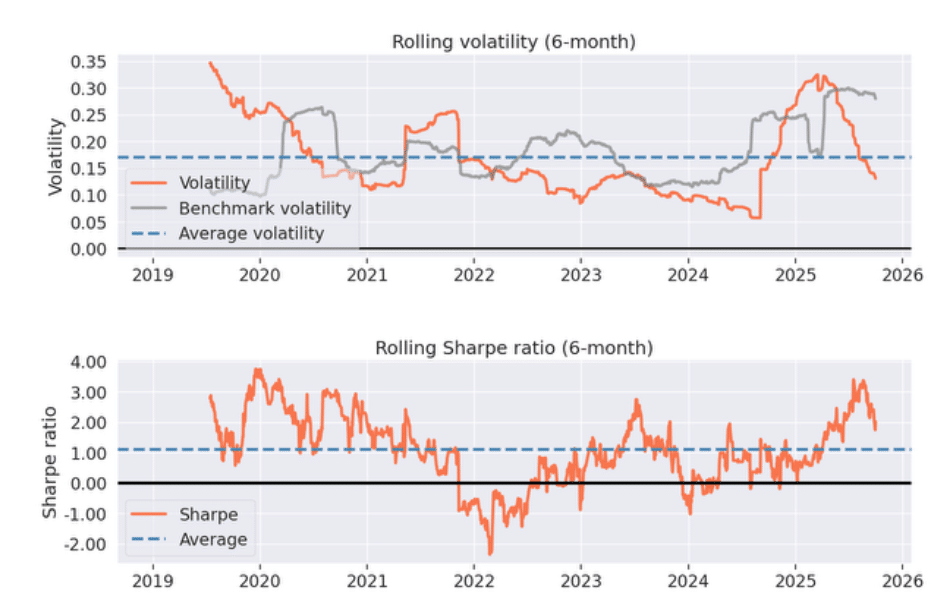
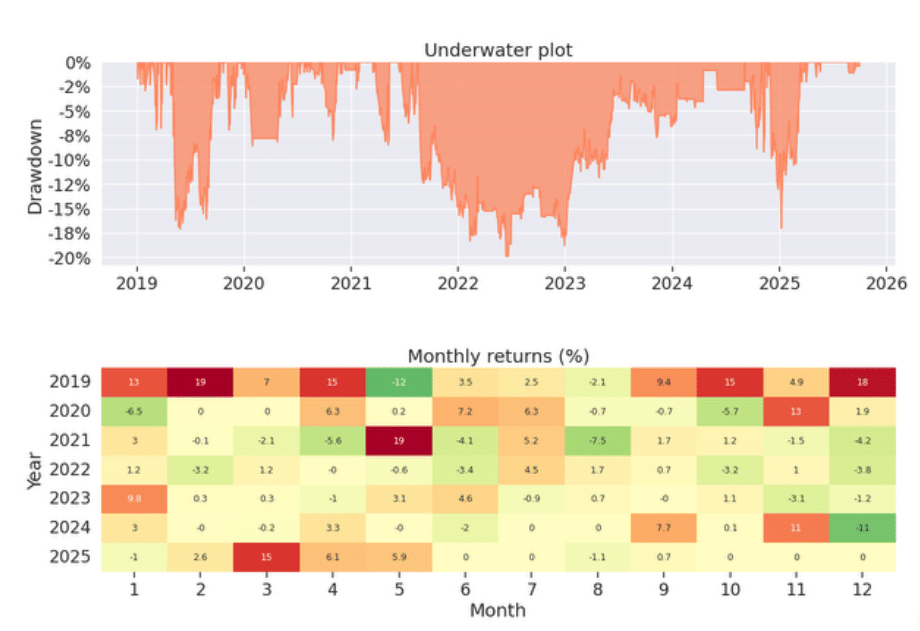
歡迎投資朋友參考,之後也會持續介紹使用 TEJ 資料庫來建構各式指標,並回測指標績效,所以歡迎對各種交易回測有興趣的讀者,選購 TQuant Lab 的相關方案,用高品質的資料庫,建構出適合自己的交易策略。
溫馨提醒,本次分析僅供參考,不代表任何商品或投資上的建議。
TEJ 知識金融學院正式上線—《TQuantLab 量化投資入門》課程強勢推出!
這門課程結合 TEJ 實證資料與專業量化方法,帶你從零開始掌握量化投資的核心概念,
協助金融從業人員、投資研究人員以及想強化投資邏輯的你,快速建立系統化分析能力!