Table of Contents
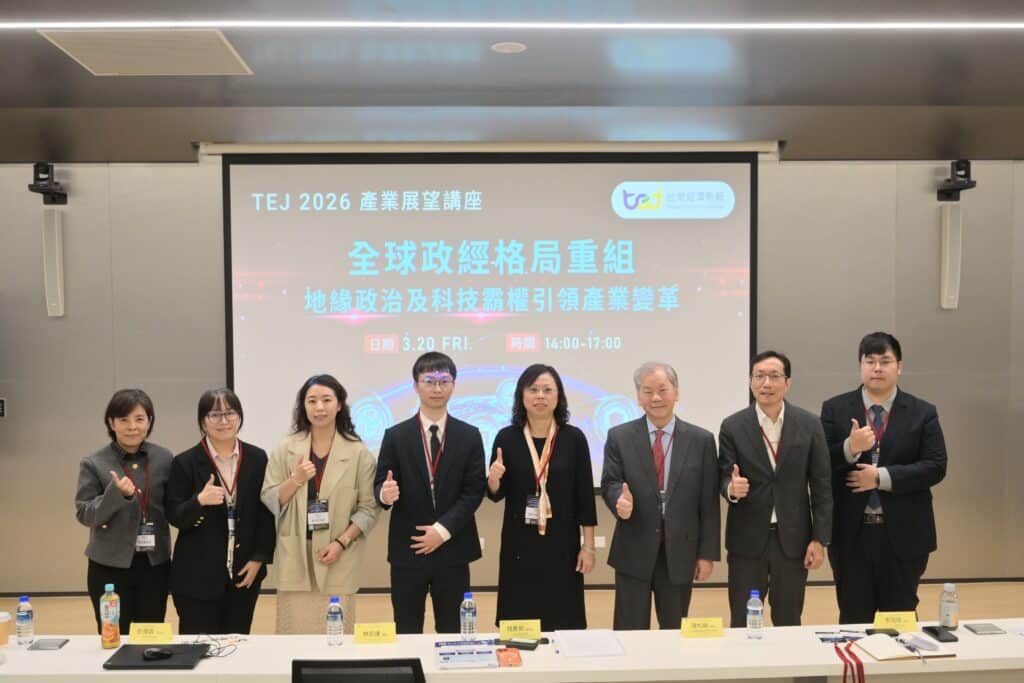
TEJ held the “TCRI 2026 Industry Outlook Seminar” on March 20, offering an in-depth analysis of how the rapidly changing global political and economic landscape is affecting Taiwan’s industries and creating new development opportunities. The seminar also explored how the rapid evolution of AI is shaping a polarized development pattern in Taiwan’s electronics industry.
The seminar covered a broad range of macro-level topics, including the impact of the Middle East conflict on the international political and economic environment, the challenges and transformation faced by traditional industries amid geopolitical tensions, and how Taiwan’s electronics industry is diverging into two distinct development trajectories under the AI trend. The seminar aimed to provide Taiwan’s industrial sector with a clearer roadmap for future development.
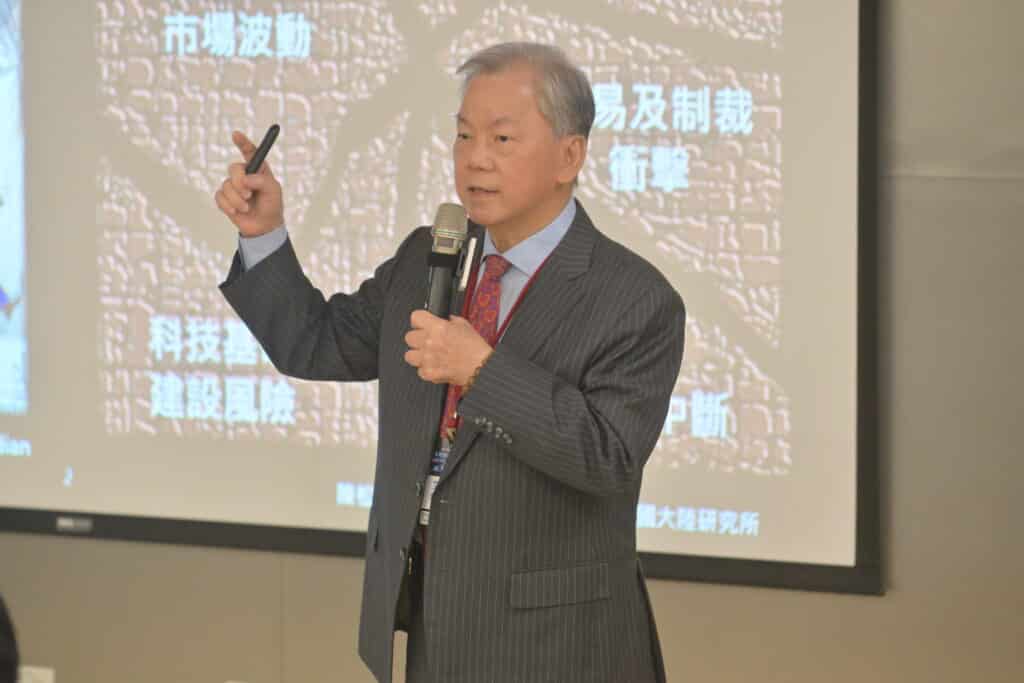
Professor Chen Sung-hsing from Graduate Institute of National Development and Mainland China Studies at Chinese Culture University noted that the U.S.–Iran conflict could have a far greater impact than expected, as a prolonged regional conflict may raise U.S. political costs, increase global recession risks, and disrupt key energy supplies and shipping routes.
Given the Middle East’s critical role in global energy and transportation, extended conflict could push up energy and transportation costs, disrupt chemical raw material supplies, reignite inflationary pressures, and trigger asset repricing. Taiwan would also face short-term pressure, as over 30% of its natural gas imports come from Qatar and nearly 70% of its oil imports are sourced from the Middle East.
Professor Chen suggested monitoring three key short-term risks: energy prices, financial volatility, and cybersecurity incidents. Over the medium to long term, the main focus should be whether the conflict spills over and how major countries respond. A monitoring dashboard tracking shipping routes, production capacity, and inventories can help assess whether the shock is becoming more persistent.
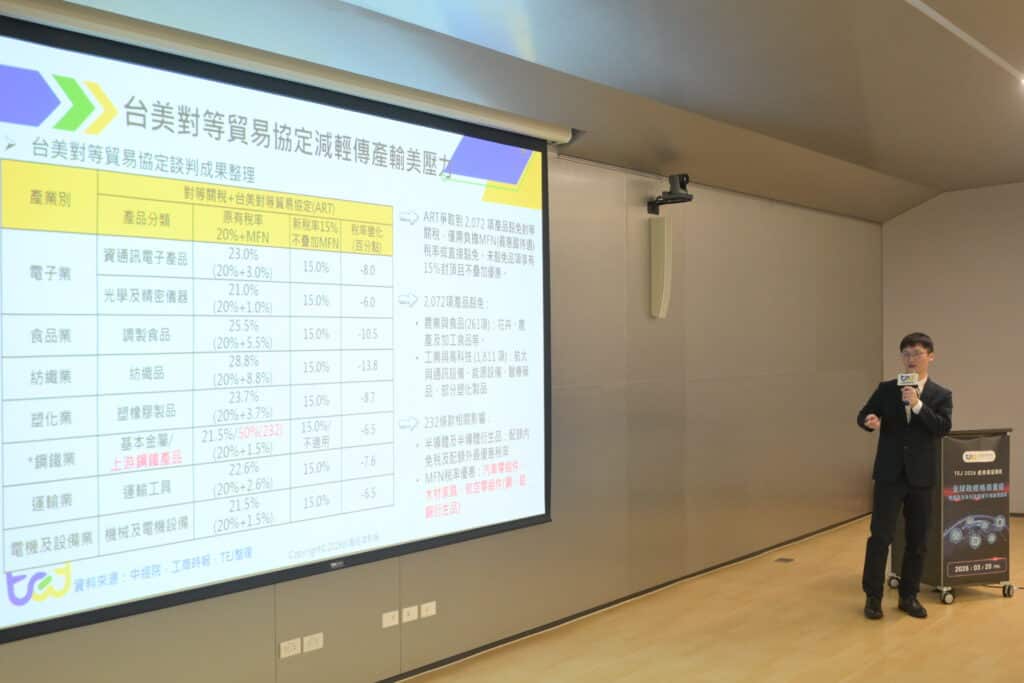
TCRI analyst Peng Wei-lin noted that Taiwan’s traditional industries remain under pressure from China’s severe overcapacity and low-price dumping, especially in sectors such as petrochemicals and steel. Although the Taiwan–U.S. reciprocal tariff trade agreement may help ease export cost pressures, the cumulative impact of tariffs should still be monitored.
In the short to medium term, the U.S.–Iran war could create supply chain risks for the petrochemical industry by disrupting crude oil and natural gas supplies, while also pushing up shipping insurance premiums and navigation costs due to risks around the Strait of Hormuz and the Red Sea.
Over the longer term, weak demand in China and its export of deflationary pressure may keep traditional industries facing oversupply challenges. However, some materials manufacturers, such as PCB material suppliers, are using the AI wave to transform and move into the AI supply chain, offering a potential path to break free from China’s overcapacity pressure.
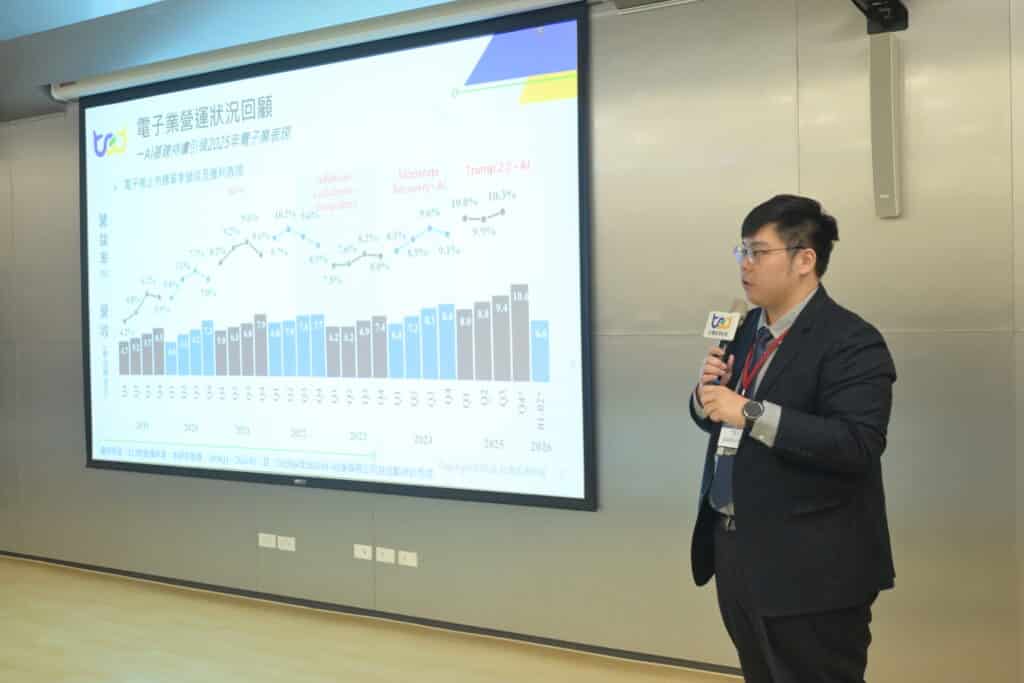
TCRI analyst Kao Yu-hsiang noted that Taiwan’s electronics industry is expected to continue benefiting from the AI wave in 2026, supported by strong capital expenditure from major CSPs and the rise of sovereign AI. As AI development shifts from training to inference, AI server specifications are becoming more diversified, with ASIC servers expected to gain stronger momentum.
However, Nvidia’s upcoming Vera Rubin series involves major specification upgrades, including higher power requirements, advanced cooling, cable-free design, CPO-based switch chips, 3nm processes, and HBM4 adoption, making the actual shipment schedule worth monitoring.
At the same time, AI development is also creating side effects. Scarce advanced process and packaging capacity, rising demand for memory and power semiconductors, higher requirements for thermal management and high-speed transmission, and surging upstream metal prices have pushed up costs across PCBs, IC substrates, memory, passive components, and chips.
As a result, PC, notebook, and smartphone markets may face greater cost pressure and weaker demand, especially in price-sensitive mid- to low-end segments. Overall, AI is supporting Taiwan’s electronics industry, but also deepening polarization between AI-related sectors and traditional ICT products. Companies that fail to diversify applications and reduce cyclical risks may face rising credit risk.
The TCRI Industry Outlook Seminar highlighted that Taiwan’s industries are facing both challenges and transformation opportunities amid global political and economic restructuring. Trade protectionism, geopolitical turbulence, and shifts in the global economic order are reshaping Taiwan’s industrial landscape.
Traditional industries may regain momentum as the Taiwan–U.S. trade agreement is gradually implemented, but they must accelerate AI-driven transformation, enhance product value, and expand into diversified markets.
Meanwhile, the electronics industry should continue investing in innovation and R&D while diversifying supply chains, applications, and end markets to strengthen resilience. Overall, whether Taiwan’s industries can seize new opportunities will depend on their innovation capabilities, adaptability, and competitiveness.
As a leading data provider in Taiwan, TEJ offers comprehensive market databases essential for quantitative investment strategies. Our Watchdog (WD) product delivers major events on Taiwan listed companies, serving as a valuable resource for event-driven and alternative data analysis.
Explore the latest insights into Taiwan’s corporate landscape with the TEJ Watchdog Database, which offers a quantitative analysis of major tech industry events and their impact on credit conditions, rated from -3 to +3. Stay informed on dynamic sector changes, understand credit risk drivers, and adjust your investment strategies with confidence.